












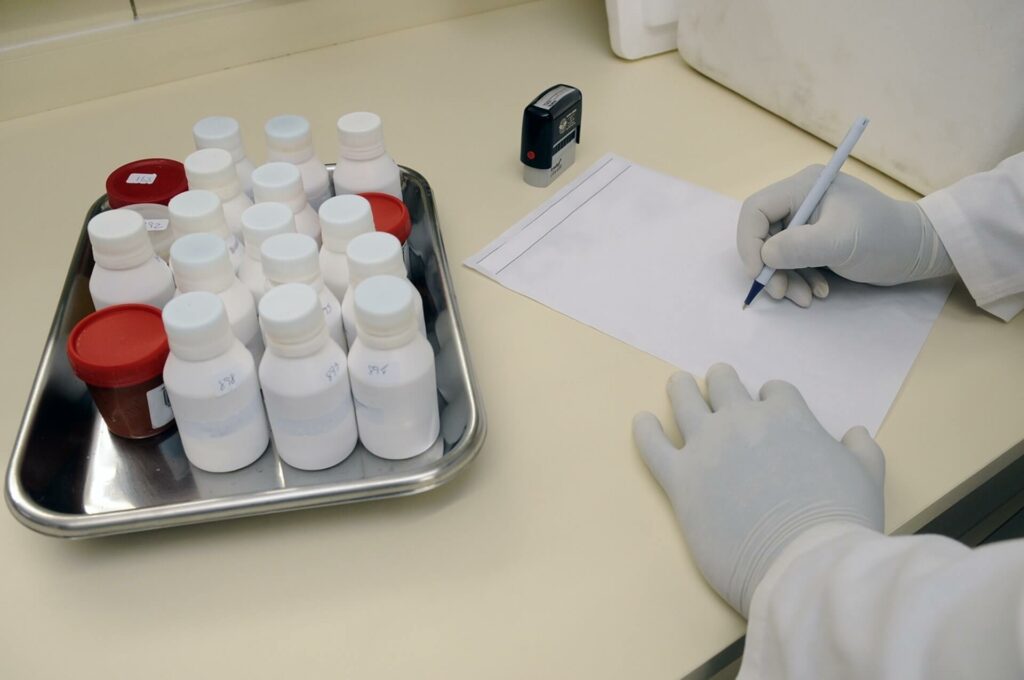

Good Laboratory Practice (GLP) is a set of criteria used to ensure quality assurance in non-clinical studies. GLP principles concern the organisational processes by which studies are planned, performed, monitored, recorded, reported, and archived. These guidelines support the integrity, reliability and traceability of safety data used for regulatory submissions.
GLP is commonly applied in the pharmaceutical industry, where it guides pre-clinical stages of drug development and clinical pharmacology. However, good laboratory practices also apply outside the pharmaceutical sector, including the safety testing of food additives, packaging, chemicals, and medical devices.
What is the purpose of Good Laboratory Practices?
In clinical pharmacology, the main aim of GLP is to ensure that all drugs tested during non-clinical stages undergo a controlled and consistent quality management process before approval for human use in clinical trials.
This helps ensure that stringent safety standards are followed before First-In-Human testing, reducing potential risks to participants. GLP also makes sure that written procedures are followed, limiting external variables that could affect the reliability of data used to approve drugs for clinical research.
The Importance of Good Laboratory Practices
Good Laboratory Practice (GLP) is fundamental to producing reliable, high-quality non-clinical safety data. It ensures that studies are transparent, reproducible, and scientifically sound, giving regulatory bodies confidence in determining whether a product is safe to advance to human trials. Without GLP, a product’s safety profile may be considered incomplete or unreliable.
GLP supports:
- high-quality, traceable safety data
- consistent study conduct
- accurate reporting and archiving
- confidence in pre-clinical results used for regulatory decision-making
What are the Good Laboratory Practice (GLP) Guidelines?
Good Laboratory Practice (GLP) comprises a series of principles that ensure non-clinical studies are planned, conducted, monitored, and reported consistently. Together, these guidelines help produce reliable, traceable data for regulatory submissions.
Personnel Roles and Responsibilities
Every GLP study must have clearly defined roles and responsibilities. A Study Director is appointed to oversee the study and ensure it complies with GLP requirements from start to finish. Alongside this, an independent Quality Assurance Unit (QAU) monitors the study to verify that procedures are being followed correctly. This separation of responsibilities helps maintain objectivity and ensures compliance throughout the study.
Study Plans and Protocols
The study plan should outline how the study will be conducted, including time schedules, stages of work, and the methods and materials used. Sometimes referred to as the study protocol, the plan must be approved and reviewed before the study can begin.
The study plan is then reviewed by the Quality Assurance Unit, which assesses its compliance with Good Laboratory Practice.
Standard Operating Procedures (SOPs)
Standard operating procedures (SOP) outline step-by-step instructions that provide methods for carrying out routine operations in laboratory and clinical settings. These procedures help improve efficiency, quality output and communication.
Typical SOPs cover:
- Equipment guidelines
- Testing items
- Record keeping, reporting and storage
- Biological test systems
- Testing and analysis procedures
- Computer system guidelines
- Quality assurance procedures
Facility, Equipment and Handling
GLP requires laboratories, equipment and storage areas to be suitably maintained, organised and fit for purpose. Equipment should be regularly calibrated and maintained, while all test and control items must be clearly labelled and stored under appropriate conditions.
Records should be maintained for:
- Dates of receipt and expiry
- Storage conditions
- Identity, purity, composition and stability
- Quantities received and used
These controls help ensure the integrity and traceability of all materials used throughout the study.
Study reports
At the end of the study, the Study Director is responsible for producing a final report that accurately documents how the study was conducted and the results obtained, an essential part of medical writing. The report should include the study methodology, any deviations from the approved study plan or Standard Operating Procedures (SOPs), the study results, a scientific discussion of the findings, and a GLP Compliance Statement confirming the study was conducted in accordance with GLP requirements.
Record Keeping and Archiving
GLP requires all study documentation to be retained for inspection by regulatory authorities. According to the UK GLP Regulations, records must be archived for the period specified by the relevant regulatory body. This includes the approved study plan, raw data, samples and reference materials, and the final study report. Maintaining complete and accessible records supports quality assurance activities, regulatory inspections and the long-term integrity and traceability of study data.
Good Laboratory Practice Examples
Good Laboratory Practice is applied at every stage of a non-clinical study to ensure that data are reliable, reproducible, and suitable for regulatory submission. Below is an example of how GLP principles are implemented in practice.
Example: A pre-clinical toxicity study
Before the study begins, a Study Director prepares and approves a detailed study plan outlining the objectives, methods and timelines. The Quality Assurance Unit reviews the protocol to confirm it complies with GLP requirements.
Throughout the study, laboratory staff follow approved Standard Operating Procedures (SOPs), use calibrated equipment, accurately label all samples and record every observation in real time. Test materials are stored under controlled conditions, with records kept of their receipt, storage and use to ensure full traceability.
At the end of the study, all results, raw data and any deviations from the study plan are documented in the final report. The complete study file is then archived, allowing regulators to inspect the data and verify that the study was conducted in accordance with GLP principles.
This end-to-end approach helps ensure that non-clinical safety data is accurate, consistent and suitable for use in regulatory decision-making.
When is GLP required?
GLP regulations are applied in the UK, the US and the EU. They are required for non-clinical safety, toxicology, and pharmaceutical studies proposed for human applications.
These guidelines were established by the Organisation for Economic Co-Operation and Development (OECD). GLP is only required in non-clinical studies and testing, and does not apply to later clinical stages of research. Following this, clinical stages of research are governed by Good Clinical Practices (GCP), which are intended to keep human participants safe during the study process.
Often, GLP is applied where it is not necessary. It is important to distinguish between the practice regulations required at different stages of clinical research.
GCP vs GLP
The main difference between GCP and GLP is their applications. Good Laboratory Practice (GLP) applies to preclinical drug safety testing, whereas Good Clinical Practice (GCP) applies across the entire clinical research process.
GCP and GLP are both inspected by the Food and Drug Administration (FDA), used to ensure safety and quality throughout the non-clinical and clinical research process.
CRO services
As a full-service CRO, we offer integrated central laboratory services to support clinical development needs. We are experts in regulatory affairs, supporting your strategy with GLP and other regulatory compliance processes to facilitate fast study approvals. Speak to our team to get started.
Good Laboratory Practices FAQS
Why are Good Laboratory Practices important?
The importance of GLP lies in its ability to guarantee that non-clinical safety studies are conducted to a high and consistent standard. Regulators depend on GLP-compliant data to determine whether a drug or product can progress safely into human research, reducing risks to participants and preventing costly delays.
When is GLP required?
Good Laboratory Practices are required whenever non-clinical safety data is intended for regulatory submission. They apply to early-stage research conducted on cell or animal models before human involvement.
What is the difference between GLP and GCP?
The main difference between GLP and GCP is the stage of research they govern. GLP regulates the quality and integrity of pre-clinical data, whereas Good Clinical Practice (GCP) sets the standards for clinical trials involving people.
What are examples of Good Laboratory Practices?
Good Laboratory Practice examples include wearing PPE, following SOPs, correctly labelling samples, maintaining clean workspaces, recording the handling of test items and ensuring equipment is serviced regularly.