












Brain tumours present a significant challenge in oncology, particularly in their malignant forms, where treatment options remain limited and outcomes can be poor. Despite ongoing advances in research, there is still a critical need to improve how these conditions are identified, understood and treated.
Recognising the symptoms of brain tumours and understanding the different types of brain tumour is essential for earlier diagnosis and more effective clinical management. With rare oncology studies continuing to play a vital role in advancing new therapies and improving patient outcomes.
What is a brain tumour?
A brain tumour is a growth of abnormal cells in or around the brain. These tumours can develop within brain tissue itself or in nearby structures such as nerves, the pituitary gland or the protective membranes surrounding the brain.
Brain tumours are broadly classified into two main groups:
- Primary brain tumours – originate in the brain
- Secondary brain tumours (metastases) – spread to the brain from cancers elsewhere in the body
They are also categorised as:
- Benign (non-cancerous) – typically slower growing but can still cause serious complications due to pressure on the brain
- Malignant (cancerous) – faster growing, invasive and more likely to damage surrounding tissue
Malignant brain tumours, such as glioblastoma, represent a significant unmet need in oncology due to their aggressive nature and limited treatment options.
Types of brain tumours
There are many different types of brain tumours, classified based on the cells they originate from. Understanding these distinctions is critical in both clinical practice and research.
Common tumour groups include:
- Gliomas – the most common malignant brain tumours, arising from glial cells (e.g. astrocytoma, glioblastoma)
- Meningiomas – usually benign tumours forming in the membranes surrounding the brain
- Medulloblastomas – fast-growing malignant tumours, more common in children
- Pituitary tumours – often benign, affecting hormone regulation
- Schwannomas (acoustic neuromas) – benign tumours affecting nerve tissue
While many tumours are benign, even non-cancerous growths can have serious neurological effects depending on their size and location.
Symptoms of brain tumours
The symptoms of brain tumours vary depending on the tumour’s size, location and growth rate. In many cases, symptoms develop gradually, although malignant tumours may cause more rapid onset.
Common symptoms include:
- Persistent or worsening headaches (often worse in the morning)
- Nausea and vomiting
- Seizures (fits), especially in individuals with no prior history
- Vision problems (blurred vision, double vision or loss of peripheral vision)
- Speech difficulties
- Weakness or loss of sensation in limbs
- Problems with balance or coordination
- Memory issues or confusion
- Changes in personality or behaviour
It is important to note that headaches alone are not usually indicative of a brain tumour, but persistent or unusual symptoms should always be evaluated clinically.
Diagnosis of a brain tumour
Diagnosing a brain tumour typically begins with a clinical assessment of symptoms, followed by referral for specialist investigation. Patients may present to their GP with persistent or concerning symptoms, or in some cases require urgent assessment following events such as seizures.
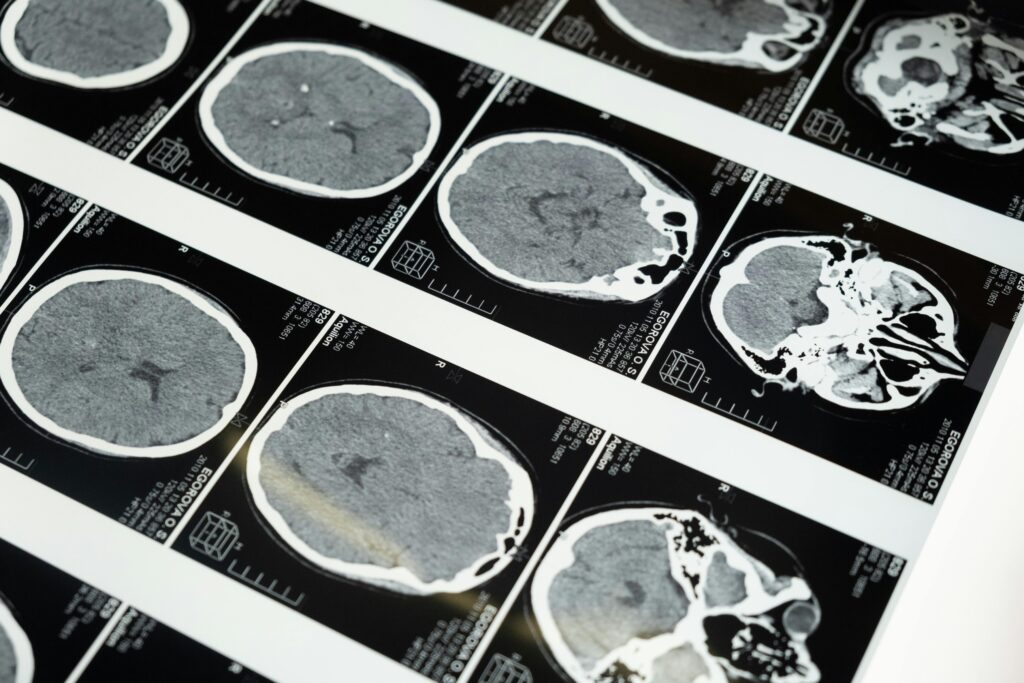
Imaging plays a central role in diagnosis. Magnetic resonance imaging (MRI) is the most commonly used technique, providing detailed images of the brain to identify the presence, size and location of a tumour. CT scans may also be used, particularly in emergency settings.
If a tumour is identified, further tests are often required to determine its type and grade. This may include a biopsy, where a small sample of tumour tissue is taken for laboratory analysis. Molecular and biomarker testing is increasingly used to better understand tumour characteristics and guide treatment decisions.
Accurate and timely diagnosis is critical, as it directly influences treatment planning and patient outcomes.
Treatment of malignant brain tumours
Malignant brain tumours are typically fast-growing and classified as high-grade (Grade 3 or 4). These tumours can infiltrate surrounding brain tissue, which often makes complete surgical removal challenging and increases the likelihood of recurrence.
Treatment usually involves a multidisciplinary approach. Surgery is often the first step, aiming to remove as much of the tumour as possible. This may be followed by radiotherapy and chemotherapy to target remaining cancer cells and help control disease progression. In some cases, targeted therapies may also be considered, depending on the tumour’s molecular characteristics.
Despite advances in treatment, outcomes for aggressive tumours such as glioblastoma remain poor. This highlights the ongoing need for research to develop more effective and personalised treatment strategies, particularly within rare oncology.
The role of rare oncology studies
Brain tumours, particularly malignant and less common subtypes, are often included within rare oncology research. Clinical studies play a critical role in:
- Improving diagnostic approaches
- Identifying novel therapeutic targets
- Evaluating new drug candidates
- Enhancing patient outcomes and quality of life
Participation in clinical trials provides access to innovative treatments while contributing to the broader understanding of these complex diseases. As a CRO, supporting rare oncology studies is essential to accelerating progress in areas where treatment options remain limited.
Raising awareness and advancing research
Awareness initiatives in March help bring attention not only to the impact of brain tumours but also to the importance of early recognition of symptoms and ongoing research efforts.
Greater collaboration between researchers, healthcare providers and patients is vital to:
- Improve early diagnosis
- Advance therapeutic development
- Expand access to clinical trials
Continued investment in rare oncology studies will be key to addressing unmet needs in malignant brain tumours and improving long-term outcomes.
Frequently asked questions about brain tumours
Are brain tumours hereditary?
Most brain tumours are not hereditary and occur without a clear inherited cause. In rare cases, genetic conditions such as neurofibromatosis can increase risk.
What is the survival rate for brain tumours?
Survival rates vary depending on the type, grade and location of the tumour. Low-grade tumours generally have better outcomes, while high-grade malignant tumours, such as glioblastoma, are associated with lower survival rates.
What are the most common symptoms of brain tumours?
Common symptoms of brain tumours include persistent headaches, seizures, nausea, vision problems and changes in behaviour or memory.
Are all brain tumours cancerous?
Brain tumours are not always cancerous. Some are benign (non-cancerous) and grow slowly, while others are malignant and more aggressive.