












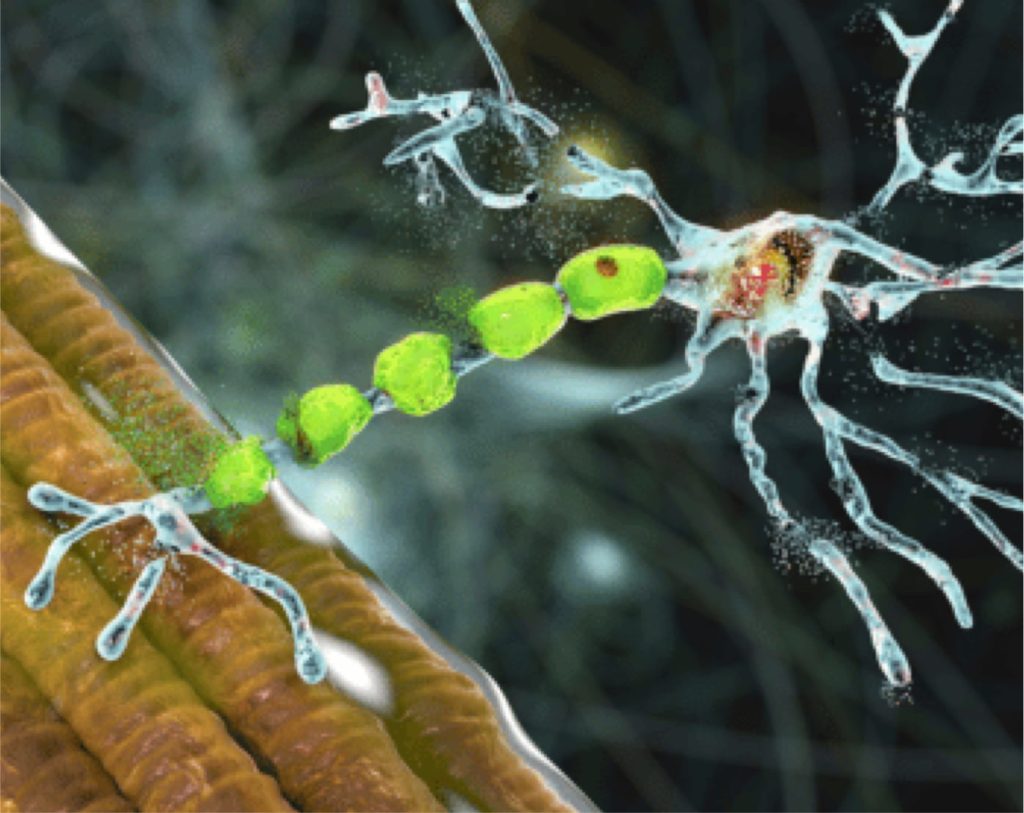
Amyotrophic lateral sclerosis (ALS) is a progressive neurological condition that affects motor neurons in the brain and spinal cord. These nerve cells control voluntary muscle movement. As ALS progresses, motor neurons deteriorate and die, leading to increasing muscle weakness and loss of physical function.
What Is ALS?
Motor neurons transmit signals from the brain and spinal cord to muscles, allowing movements such as walking, speaking, swallowing and breathing. In ALS, these signals gradually fail as motor neurons become damaged.
As a neurological condition, ALS falls within a broader group of central nervous system disorders that present unique challenges for clinical research. When muscles no longer receive nerve signals, they weaken and shrink (atrophy). ALS affects both upper motor neurons, which originate in the brain, and lower motor neurons, which connect the spinal cord to muscles throughout the body.
Most cases occur without a known cause and are described as sporadic ALS. Around 5 to 10% of cases are inherited, known as familial ALS, and are linked to genetic mutations.
ALS Symptoms
Symptoms of ALS vary depending on which motor neurons are affected first. In many people, symptoms begin in the arms or legs and gradually spread to other muscle groups.
Common ALS symptoms include:
- Progressive weakness in the arms or legs
- Muscle twitching and cramping
- Muscle stiffness or spasticity
- Difficulty walking or frequent falls
- Slurred or slow speech
- Difficulty swallowing
- Excess saliva or drooling
- Fatigue
- Involuntary emotional responses, such as laughing or crying
ALS does not usually affect sensation, bladder control, or intellectual awareness, particularly in the early stages.
ALS Life Expectancy
ALS is a life-limiting condition. On average, survival is 3-5 years after diagnosis, although progression varies.
- Some people live longer than five years
- A smaller proportion live ten years or more
Life expectancy is influenced by age at diagnosis, rate of progression, respiratory involvement and access to specialist care.
ALS Treatment Options
There is currently no cure for ALS. Treatment focuses on slowing disease progression where possible, managing symptoms and supporting daily function.
Medications
Medications approved for ALS treatment include:
- Riluzole, which may modestly extend survival
- Edaravone, which may slow functional decline in some individuals
- Gene-targeted therapies are used in specific inherited forms of ALS
Other medications may be used to manage muscle stiffness, cramps, pain, excess saliva, sleep problems, or mood changes.
Supportive Care and Therapies
Supportive care plays a central role in ALS management and is usually provided by a multidisciplinary team.
This may include:
- Physical therapy to maintain mobility and reduce stiffness
- Occupational therapy to support daily activities and independence
- Speech and language therapy for communication and swallowing
- Nutritional support, including feeding tubes when needed
- Respiratory support, such as non-invasive ventilation
Stem Cell Treatment for ALS
Stem cell therapy for ALS is currently under investigation. Research is exploring whether stem cells may help protect motor neurons or modify disease processes. At Present:
- Stem cell treatments are not approved as standard ALS therapy
- Evidence of benefit remains limited
- Such treatments are only available within regulated clinical trials
Early-stage ALS research requires careful study design to ensure safety, feasibility, and meaningful clinical outcomes before larger trials are undertaken.
Living With ALS
Living with ALS involves progressive physical changes and practical challenges. Management focuses on maintaining comfort, independence and quality of life.
Key considerations include:
- Early involvement of specialist care teams
- Planning future medical and care decisions
- Use of assistive technology for mobility and communication
- Psychological and emotional support
- Support for family members and caregivers
ALS Clinical Trials
Clinical trials play an important role in improving the understanding of ALS and developing new treatment options. These studies evaluate the safety and effectiveness of potential therapies, as well as new approaches to diagnosis and symptom management.
Current ALS clinical trials may investigate:
- New medications designed to slow disease progression
- Gene-based therapies for inherited forms of ALS
- Biological markers (biomarkers) that may help with earlier or more accurate diagnosis
- Treatments aimed at improving breathing, nutrition, or quality of life
Some trials involve testing new drugs, while others study existing medications used in different conditions. Researchers also use clinical trials to better understand how ALS progresses over time. However, with ALS being considered a rare disease, it can make trials difficult in terms of patient recruitment, long-term follow-up, and trial design.
ALS Awareness
Awareness of ALS is important for improving recognition of early symptoms and supporting timely referral to specialist neurological services. Because early signs can be subtle and overlap with other conditions, lack of awareness may contribute to delays in diagnosis.
ALS has received public attention through a range of awareness initiatives, including the Ice Bucket Challenge, a widely recognised social media campaign that brought global attention to the condition and generated funding for ALS research. Such initiatives have helped increase public discussion of ALS and its impact on individuals and families.
Ongoing awareness efforts support access to specialist care, assistive technologies and community services, and encourage participation in research and clinical studies. Improved understanding within workplaces, healthcare systems and communities can also help address the practical and social challenges faced by people living with ALS and those who care for them.
Clinical Trials at Simbec-Orion
Simbec-Orion provides end-to-end clinical trial management across a wide range of therapeutic areas and trial phases, including rare diseases. Our expert approach allows us to integrate with client teams and deliver support throughout the clinical development journey. With nearly five decades of experience as a full-service CRO, we partner with global organisations to drive high-quality clinical trials. Get in touch to see how we can support you with your next clinical trial.
ALS FAQs
Is ALS hereditary?
Most people with ALS do not have an inherited form of the disease. Familial ALS accounts for about 1 in 10 cases and is caused by specific genetic mutations passed down through families. Genetic testing may be offered in certain situations, particularly when there is a family history.
What are the first symptoms of ALS?
Early symptoms often include muscle weakness in one limb, hand clumsiness, foot drop, muscle twitching, or changes in speech. Symptoms typically begin in one area and gradually spread to other parts of the body.
Does ALS affect the brain or thinking?
ALS primarily affects motor neurons and does not usually impair intelligence or awareness. However, some people with ALS may experience changes in behaviour, decision-making or language, and a smaller proportion develop frontotemporal dementia.
Is ALS painful?
ALS is not usually painful, particularly in the early stages. Pain may occur later due to muscle stiffness, immobility or joint strain, but this can often be managed with appropriate treatment and supportive care.
Where can people with ALS get support?
Support is typically provided through specialist neurology clinics, multidisciplinary care teams, community health services and patient support organisations. Caregiver support is also an important part of ALS management.